Every square has a name, such as e4. A move is written as the letter of the piece plus the square it goes to: Nf3. A pawn has no letter. A capture is x, check is +, mate is #, castling is 0-0.
64
Squares, each with its own name from a1 to h8.
5
Letters: K, Q, R, B and N. A pawn has none.
Play it through
0 / 9
Starting position
Every square has a name: a letter for the file (a to h) and a number for the rank (1 to 8). White is at the bottom, on ranks 1 and 2.
Tip: use the arrow keys.
The letters for the pieces
- K: king
- Q: queen
- R: rook
- B: bishop
- N: knight
- A pawn has no letter.
Other languages use different letters. In German they are K, D, T, L and S. If you see Sf3 in a German book, it's the same as Nf3.
Symbols you'll often see
- x: capture, as in Bxc6.
- +: check.
- #: checkmate.
- 0-0 and 0-0-0: kingside and queenside castling.
- e8=Q: a pawn on e8 becomes a queen.
- ! and ?: a good or a bad move. !! and ?? say it even more strongly.
Two pieces to the same square
If two identical pieces can go to the same square, you add which piece you mean. Here both knights can go to d2. If the knight from b1 goes, you write Nbd2. If the knight from f3 goes, Nfd2.
Recording a game yourself
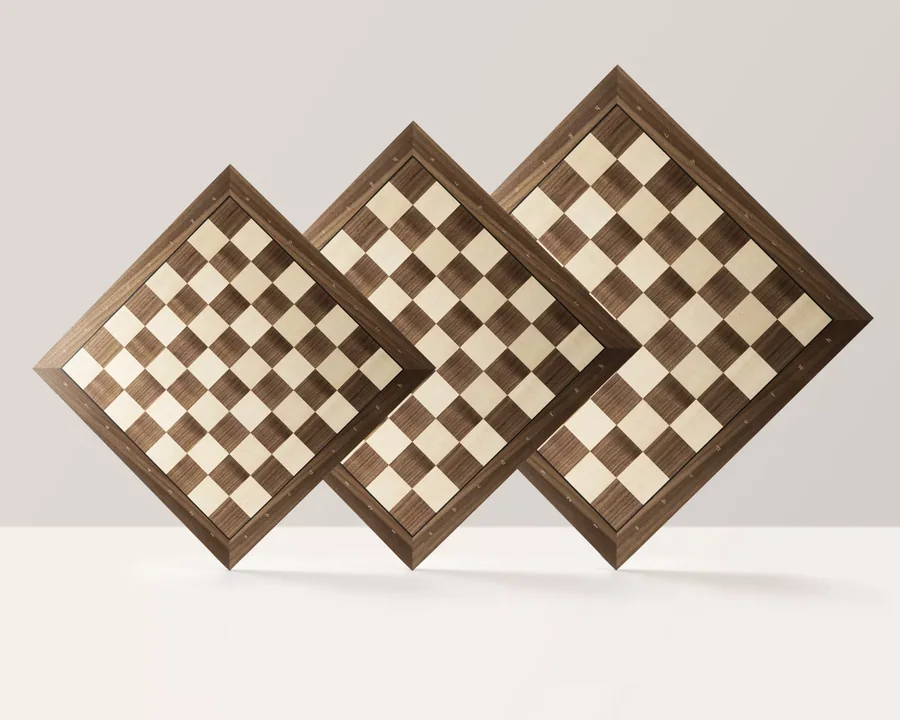
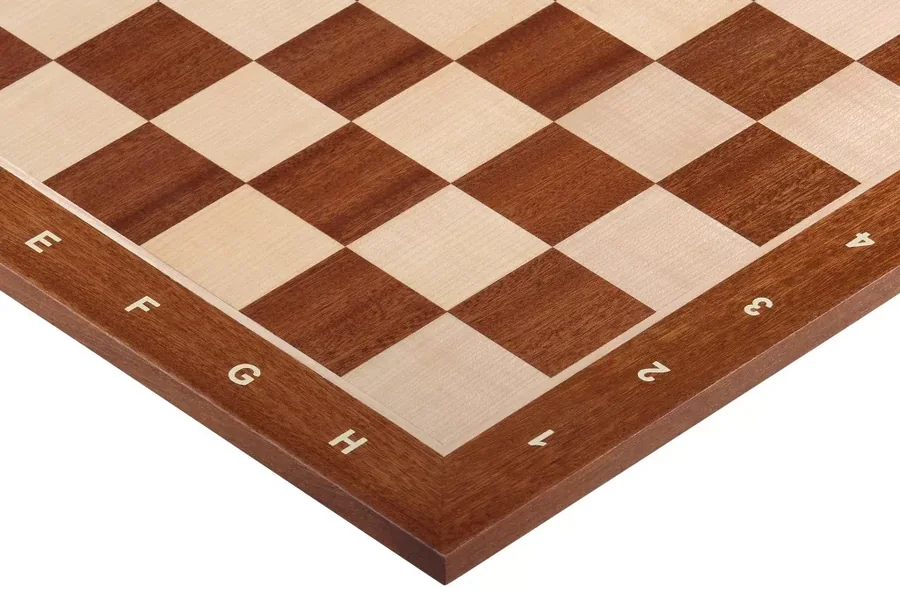
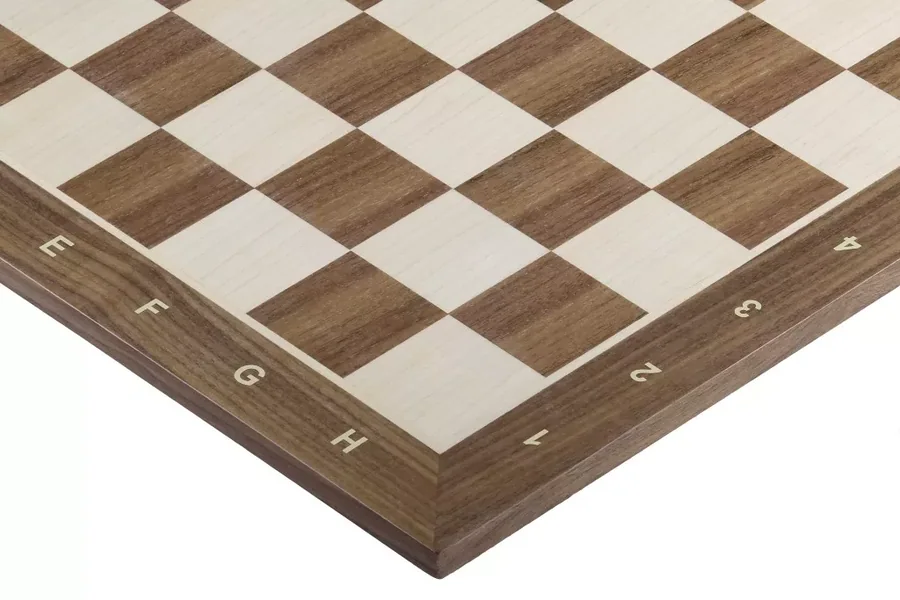
In classical tournament games, both players write down every move on a scoresheet. It's useful at home too: you can replay a game later and see where it went wrong. A board with letters and numbers along the border makes it easy.
Practise with puzzles
You will see the notation again and again in the puzzles and with the coach. A new puzzle is ready every day.