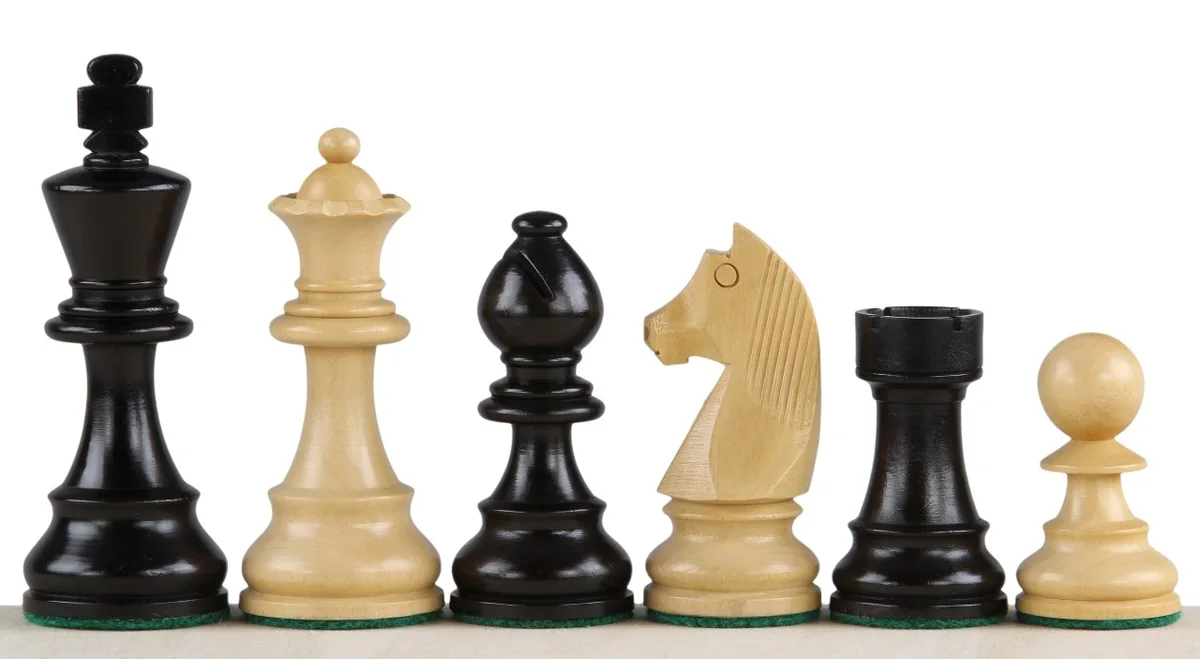
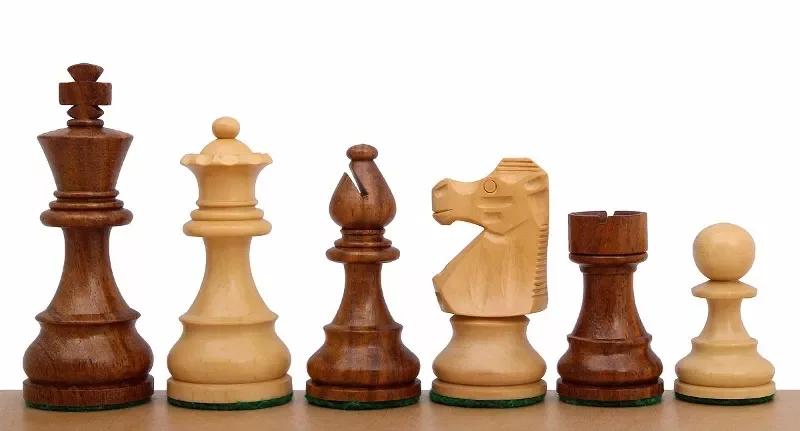
Staunton pieces are the classic shape of chess pieces, designed in London in 1849 and named after the English chess player Howard Staunton. Every piece can be recognised at a glance. That is why they are the standard at tournaments all over the world.
1849
The year the design appeared in London.
6
Types of pieces, each recognisable at a glance.
Where does the design come from?
Before 1849, almost every country had its own chess pieces. Players from different countries sometimes barely recognised each other's pieces. In 1849 a new design came onto the market in London, made by the firm of Jaques. The strongest English chess player of the time, Howard Staunton, endorsed the pieces and gave them his name.
The design was simple, sturdy and clear. It was quickly adopted everywhere and is now the shape the World Chess Federation FIDE requires for tournaments.
How to recognise each piece
- King: the tallest piece, with a cross on top.
- Queen: slightly smaller, with a pointed crown.
- Bishop: a mitre with a slanted notch.
- Knight: a horse's head, often the most beautifully carved piece in the set.
- Rook: a castle tower with battlements.
- Pawn: the smallest piece, with a small ball on top.
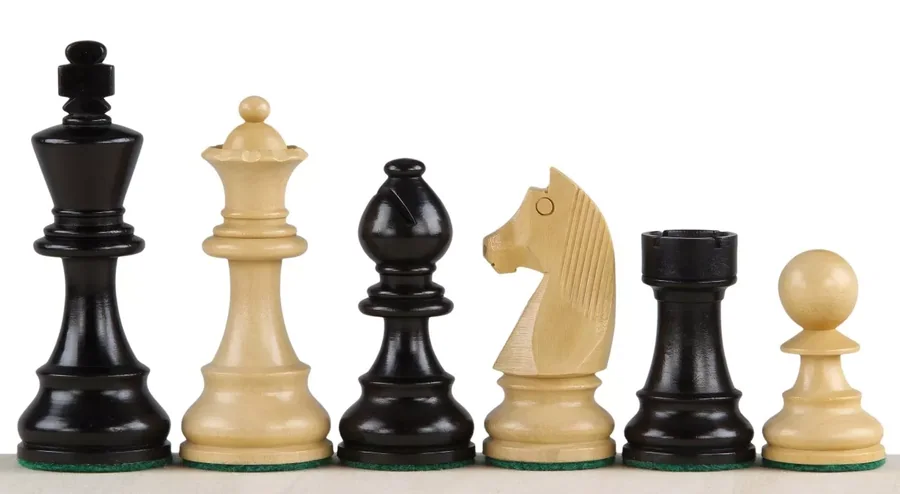
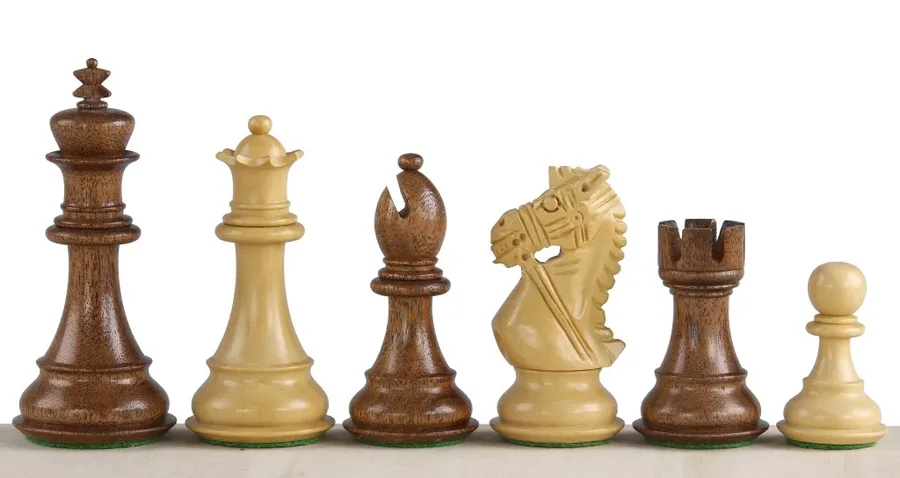
German Knight, French and Kings Bridal
There are variants within the Staunton shape. With the German Knight, the knight is sturdier and more angular. The French Staunton has a simpler, rounder silhouette. With the Kings Bridal, the reins and bit are carved into the knight. They all play the same; the difference is in the carving.
Which size of Staunton pieces?
The size is read from the height of the king. Staunton size 4 has a king of about 78 mm, size 5 about 90 mm and size 6 about 95 mm. Tournaments use a king of about 9.5 cm, which is size 6. Read more in which chessboard size suits you.
Why weighted?
Many Staunton pieces have a steel weight in the base. They stand more firmly, tip over less easily and sit better in the hand. Classic pieces are made of boxwood (light) and black stained wood or ebony (dark).