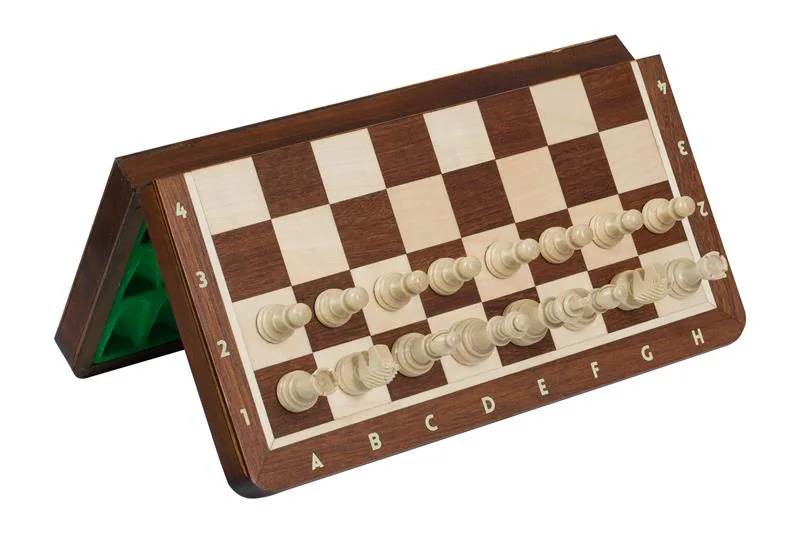
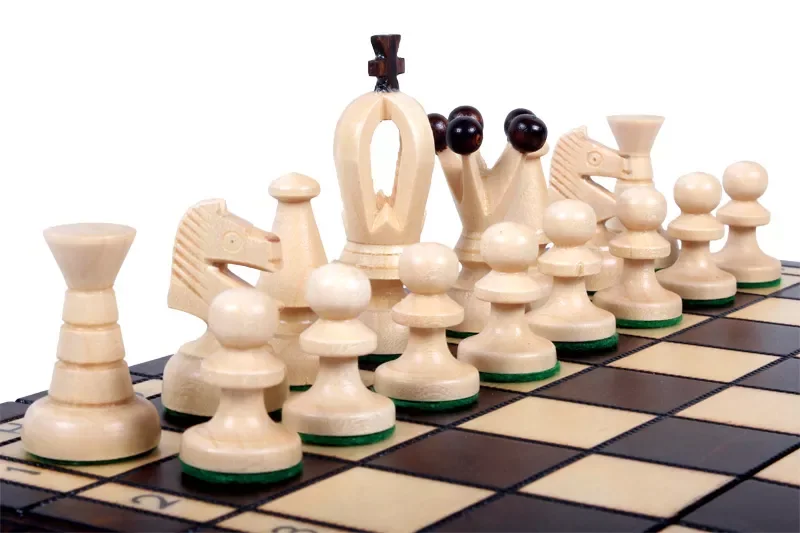
For a child, choose a sturdy wooden set with clear Staunton pieces and letters and numbers along the board. A king of about 60 to 65 mm fits well in a child's hand. A magnetic set is handy in the car or on holiday.
60–65 mm
Height of the king that fits well in a child's hand.
a–h, 1–8
Letters and numbers along the board help with learning.
From what age?
Many children learn chess from about age five or six, often through school or a parent. Begin with how the pieces move and play small games first, for example with pawns only. The full game will follow naturally. Chess pieces are small: keep them out of reach of children under three.
What to look for
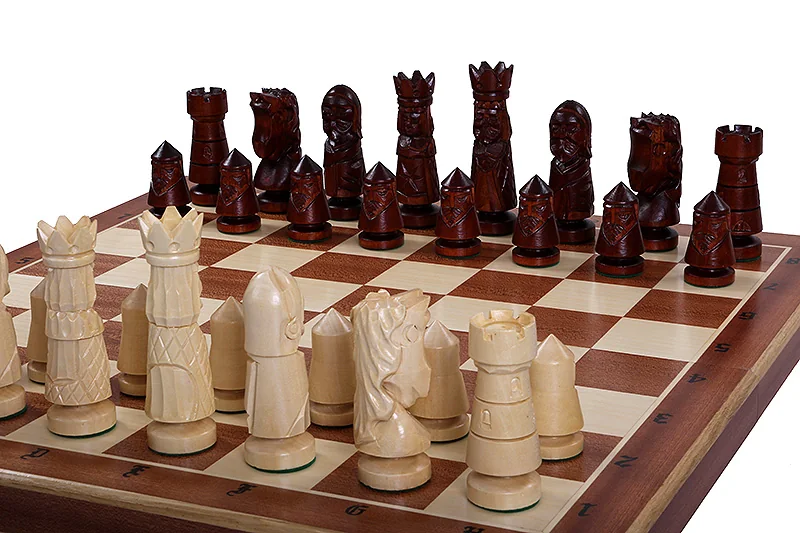
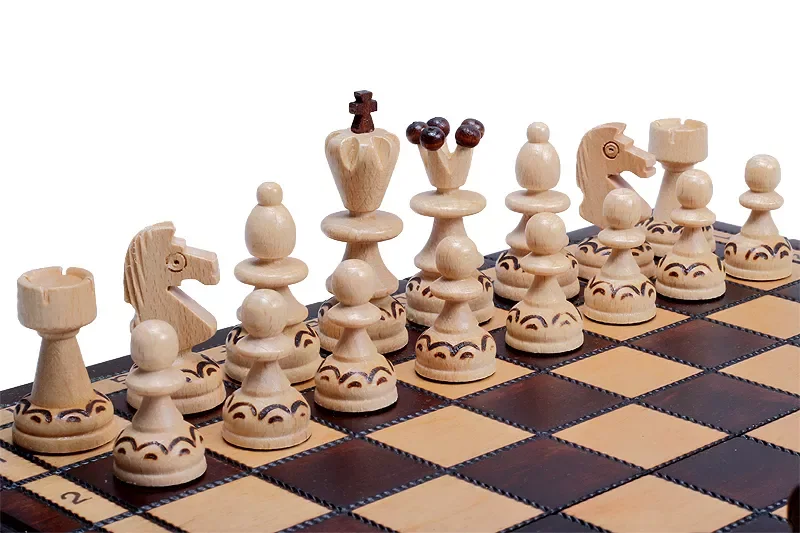
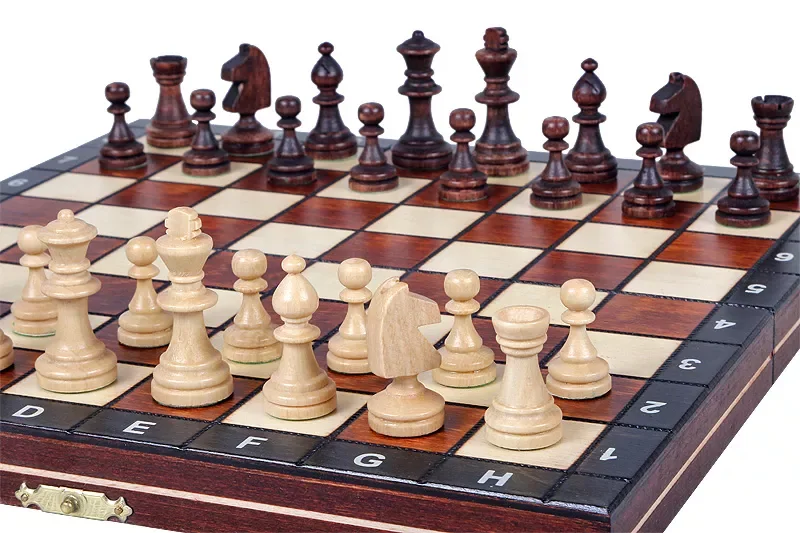
- Clear pieces: classic Staunton pieces are the easiest to recognise. Fantasy pieces look lovely, but are hard to learn with.
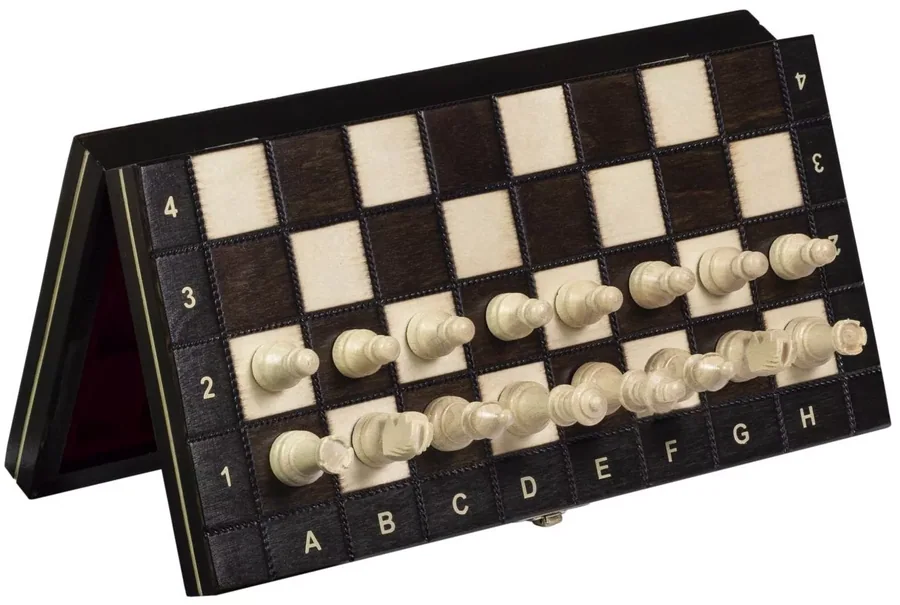
- Letters and numbers along the board: this way a child learns right away what the squares are called, such as e4.
- Sturdy wood: a wooden set can take a knock and lasts for years.
- A box with compartments: every piece has its own place, and nothing gets lost.
Small and sturdy
A folding box of about 30 cm with a king of 60 to 65 mm is a good size for children's hands and takes up little space. The wooden school chess is even smaller and fits in a bag or backpack.
Magnetic: the pieces stay in place
With a magnetic chess set, the pieces don't fall over if the board gets bumped. Handy in the car, on the train or on holiday, and you can fold up a game and continue later.
Learning chess together
Start with setting up the board and then how the pieces move. Playing against a child? Give them a head start: play without your queen, or use a chess clock with less time for yourself. The DGT Easy Plus can set a separate time for each player.
Let your child practise online
A friendly computer and a coach in short sentences. No adverts and no account needed.