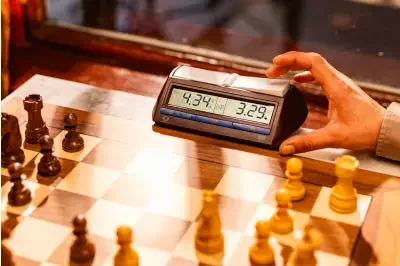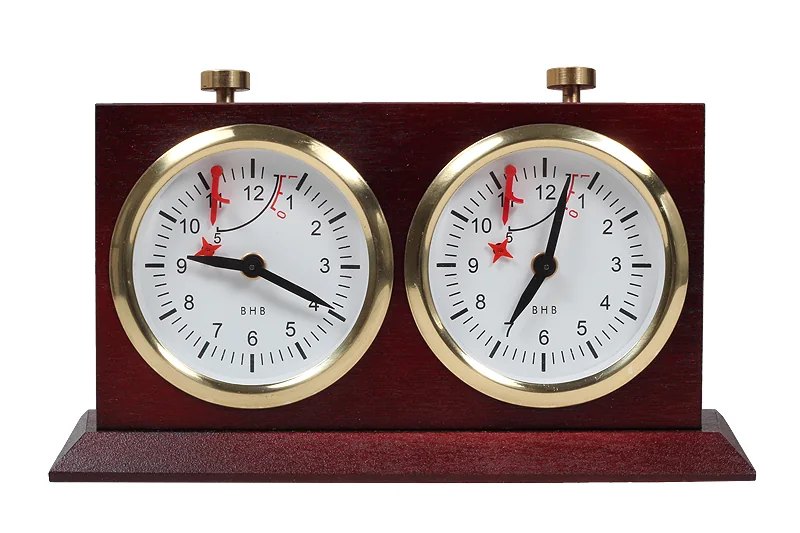
A chess clock has two clocks in one case. After your move you press your button: your time stops and your opponent's starts running. Whoever runs out of time loses the game. A digital clock can also add seconds per move.
3+2
Three minutes per player, two seconds increment per move.
2
Clocks in one case, one per player.
How to use a chess clock
- Agree on the time control and set it for both players.
- Put the clock beside the board so both players can see it clearly.
- At the start, White's clock is started: Black presses his button.
- After each move, press your own button with the same hand you moved with.
- When your time is up, the flag falls on an analogue clock and a digital clock shows a flag or 0:00.
Increment and delay
On a digital clock you can set more than just a fixed time. With increment (also called bonus or Fischer) you get a few extra seconds after every move. With delay the clock waits a few seconds before your time starts running. Both make sure you don't lose on time in a winning position.
A time control is written as minutes plus seconds: 3+2 is three minutes per player with a two-second increment per move.
The common time controls
- Bullet: less than three minutes per player, mostly online.
- Blitz: ten minutes or less per player, for example 5+0 or 3+2.
- Rapid: more than ten and less than sixty minutes per player, for example 15+10.
- Classical: long games at clubs and tournaments, for example 90 minutes with a 30-second increment per move.
Analogue or digital?
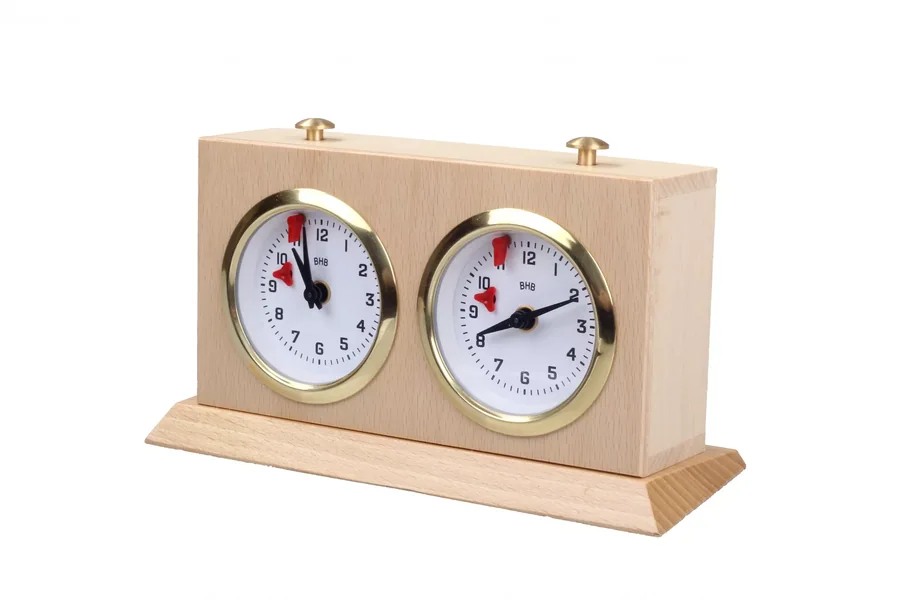
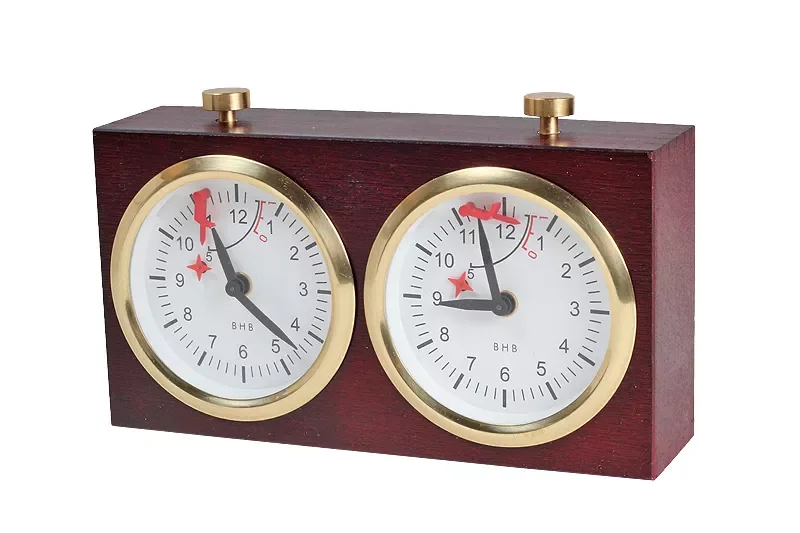
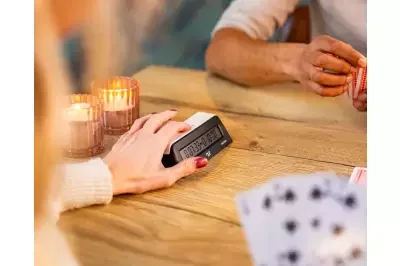
An analogue clock has two dials and a wind-up mechanism, so no batteries. It's lovely to look at and a classic next to a wooden board. It can't do increment.
A digital clock is more precise, shows seconds and can do increment and delay. For club games and tournaments, digital is the standard.
Which chess clock suits you?
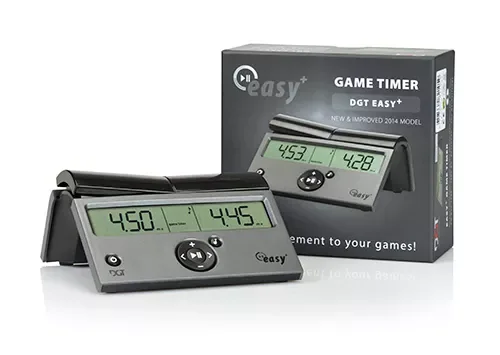
- At home and at school: a simple clock such as the DGT 1001, or the DGT Easy Plus with buttons on the front and separate time per player.
- Blitz: the DGT 1500, which shows tenths of seconds and supports increment and delay.
- Club and tournament: the DGT 2010, the official FIDE clock, or the DGT 2500 with a larger display.
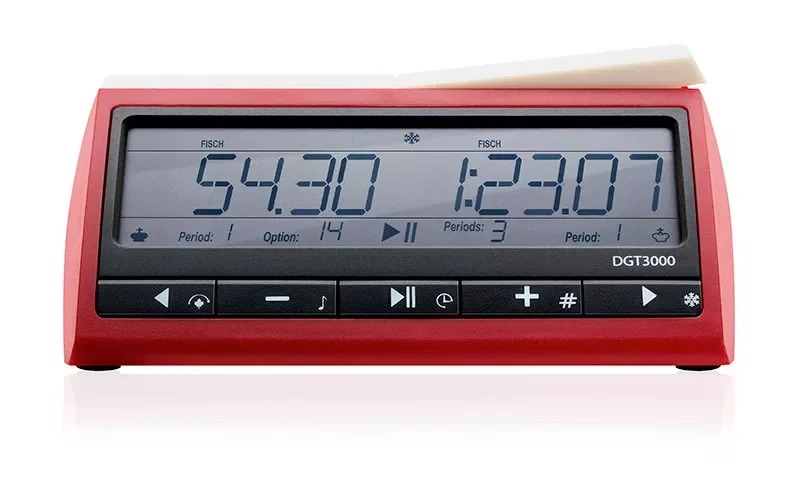
- The top model: the DGT 3000, with 25 preset time controls and five memory slots of your own.