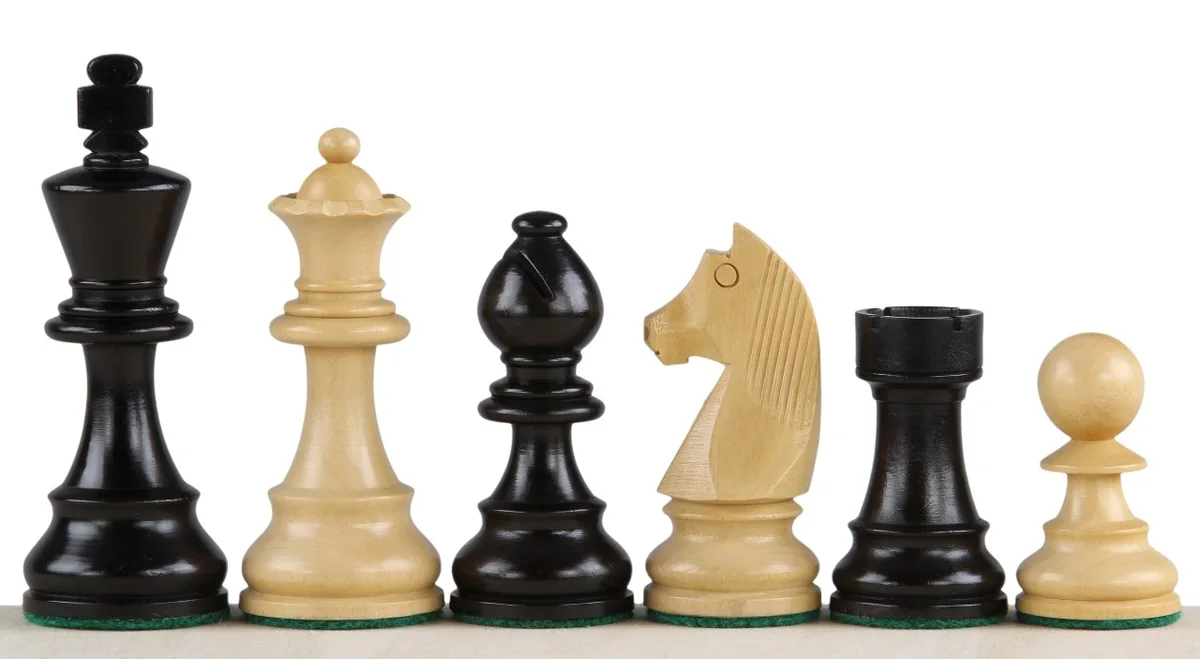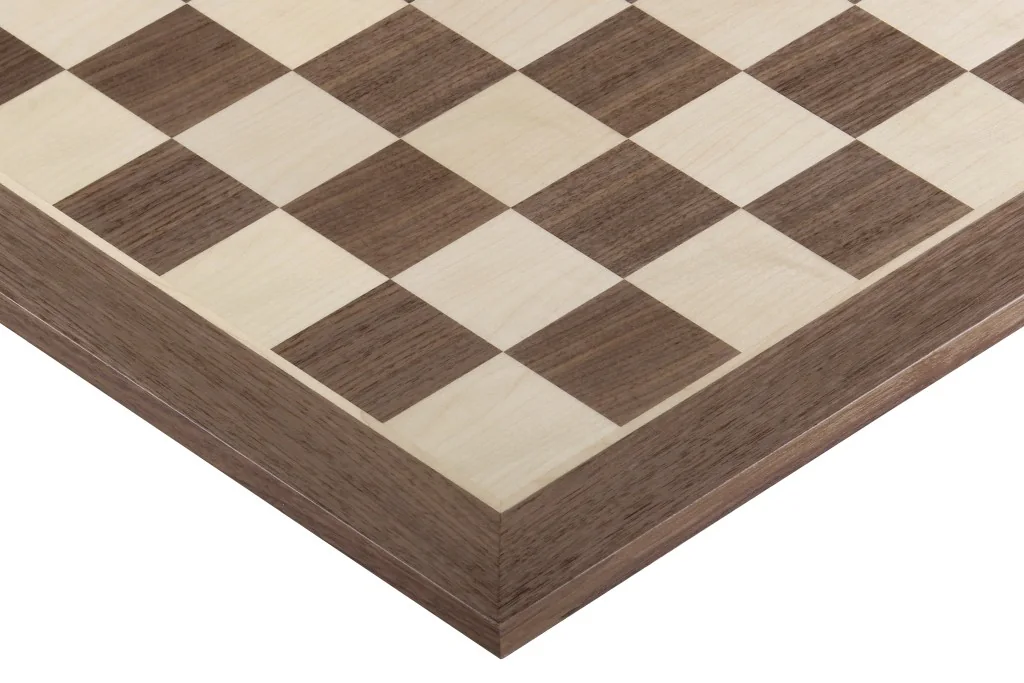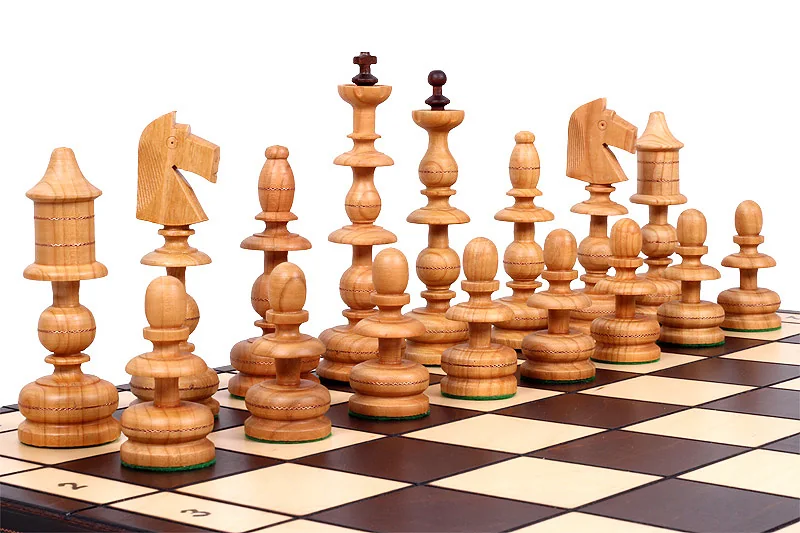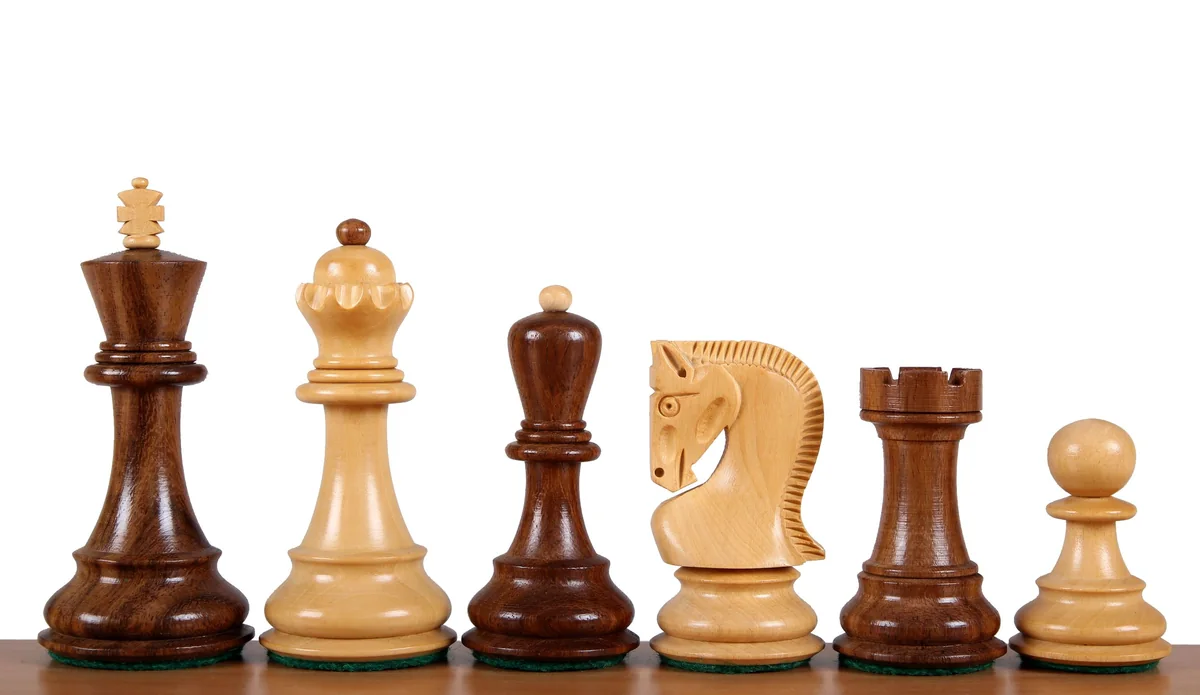
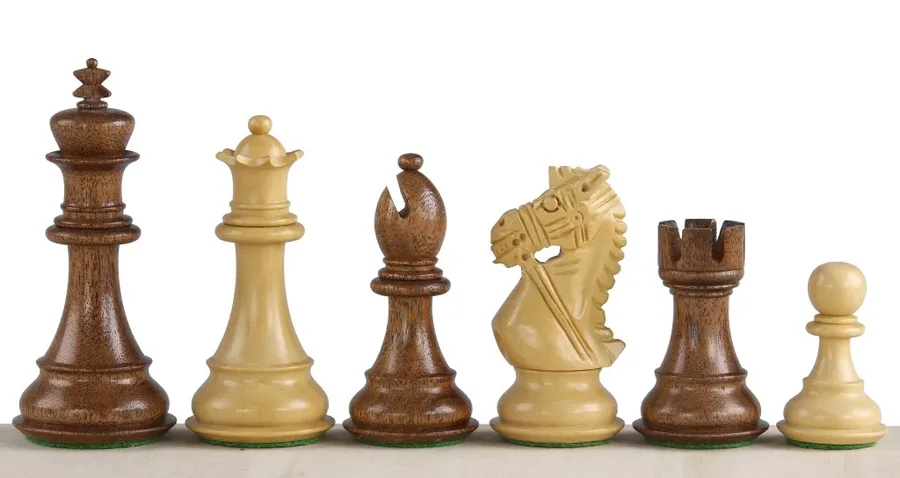
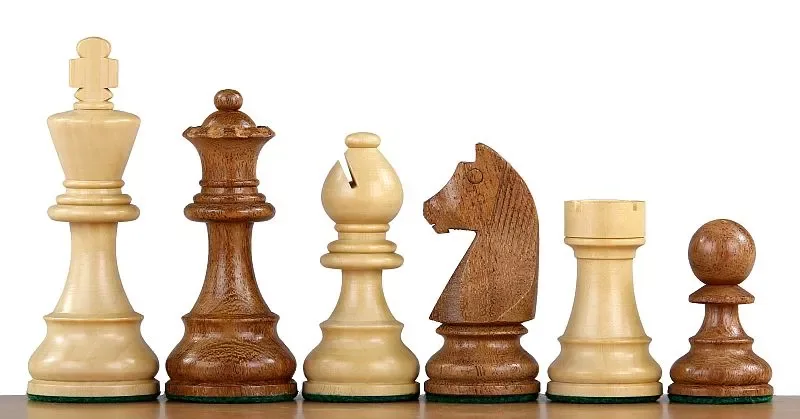
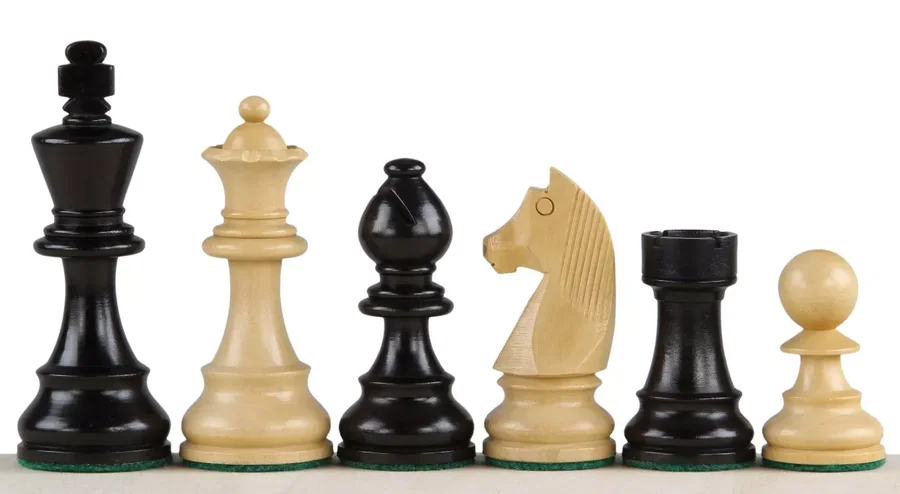
For the light pieces, boxwood is the classic choice: hard, smooth and light in colour. For the dark pieces, acacia or black stained wood is often used. Boards usually have maple squares combined with walnut, mahogany or wengé.
Boxwood
The classic wood for the light pieces.
Maple
The light squares of most boards.
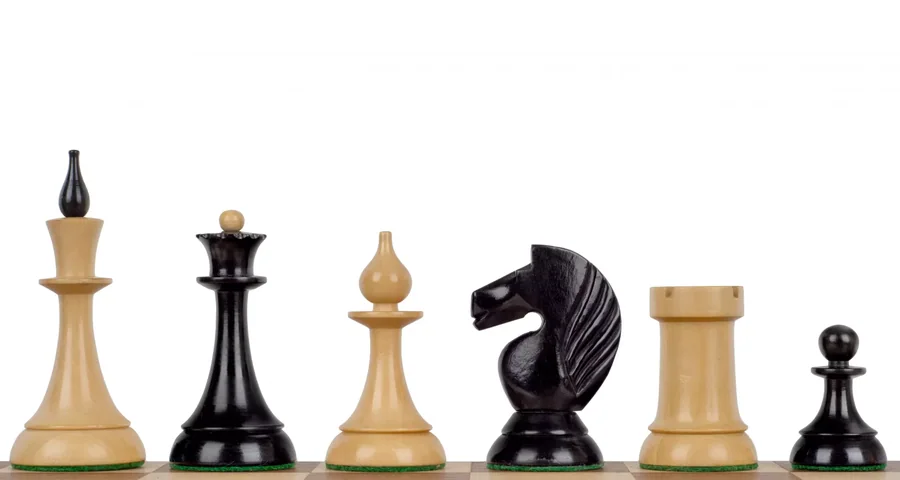
Boxwood: the classic light wood
Boxwood is hard and has a fine grain, so sharp detail can be carved into it. Its colour is light, between cream white and pale yellow. That's why boxwood is widely used for the white pieces of a good set.
Acacia: warm brown
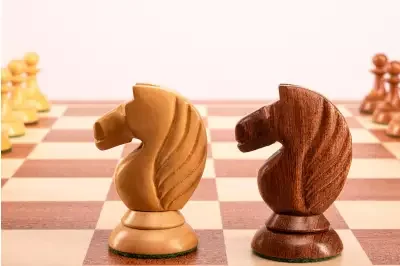
Acacia is a sturdy wood with a warm brown colour and a distinct grain. Next to boxwood it gives a beautiful, natural contrast, without stain. Every set looks slightly different, because no two pieces of wood are the same.
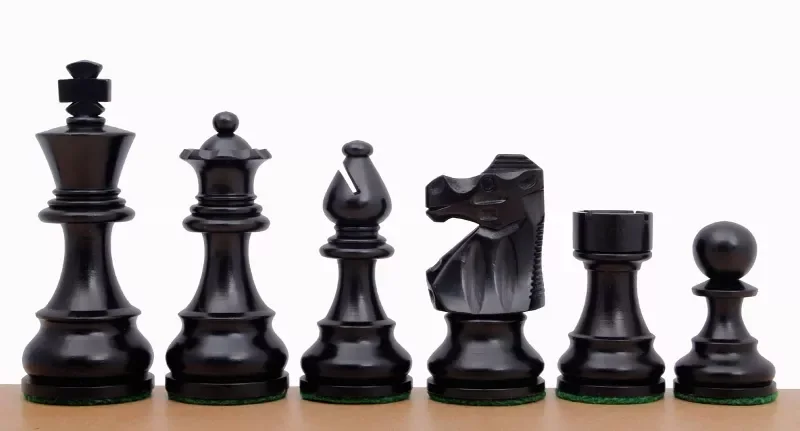
Black stained
For the classic black-and-white look, wood is stained dark. This gives you deep black pieces against light boxwood, as at many tournaments. With stained wood you see less of the grain, so the shape of the piece stands out more.
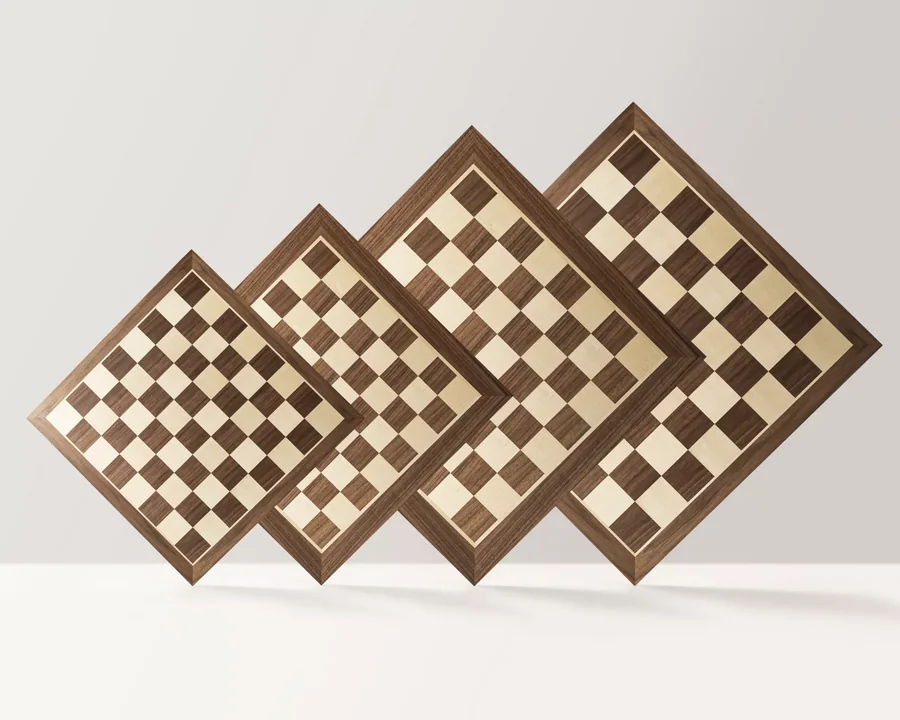
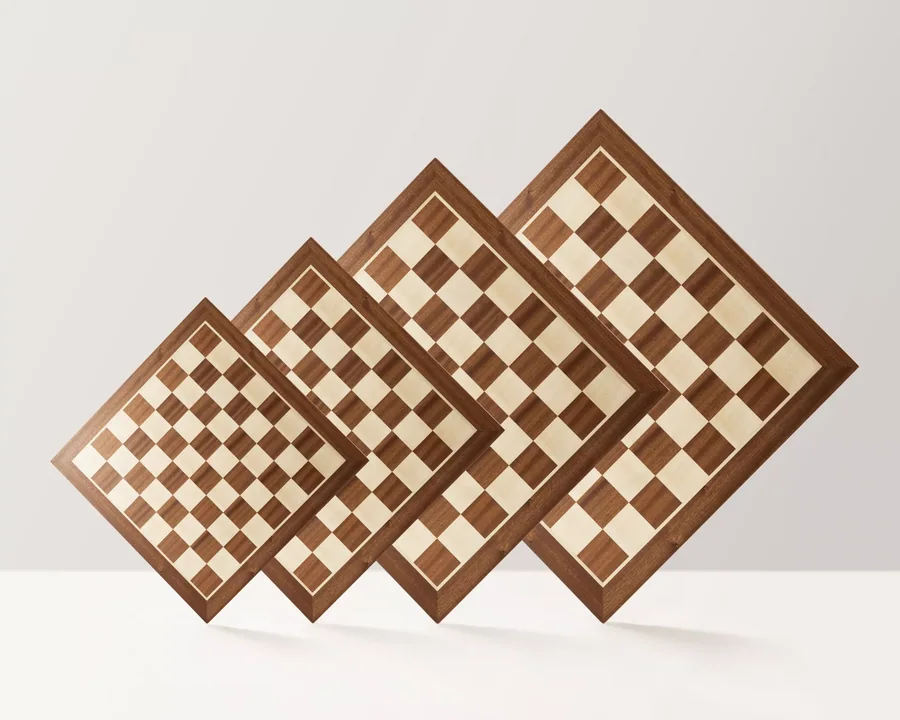
Wood for chessboards
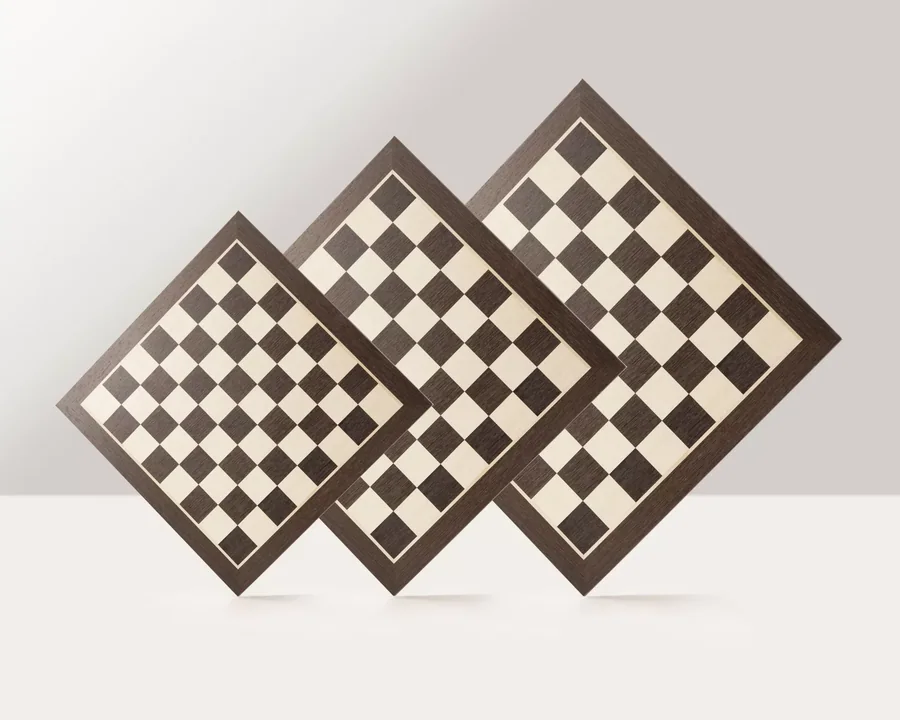
A chessboard has light and dark squares made of two types of wood. The light squares are usually maple. For the dark squares you'll see walnut (warm brown), mahogany (reddish brown) and wengé (almost black). Choose a board that suits your pieces: light pieces stand out more on a dark board.
Why does one set cost more?
The price depends on the wood, the carving and the finish. Hand-carved pieces, such as a knight with a bridle, take more time than turned pieces. Weighted pieces have a weight in the base and felt underneath. Inlaid squares and a lacquered finish also make a board more expensive.
How to care for a wooden chess set
- Dust with a dry, soft cloth. No water or cleaning products.
- Not in direct sunlight or next to a radiator: wood can discolour and dry out.
- Store the pieces in a box or pouch so they don't knock against each other.